
Before help arrives
- Shut the water off at the fixture or the main if you can reach it safely.
- Keep out of any room where water has reached outlets, cords, or the electrical panel.
- Lift furniture off wet carpet and move what you can to a dry floor.
- Photograph the damage and the failure point before anything is moved.
- Do not use a household vacuum to pick up standing water.
A flooded basement Warren MI and across the county: why it happens here
This is a flat glacial lake plain with heavy clay under a thin layer of topsoil, and the water table sits close to the surface for much of the year. Clay drains slowly, so a summer downpour stands in the ground instead of soaking away, and a March thaw over still-frozen soil does the same thing. Because footings here have to be carried well below the frost line, digging a full basement costs little more than digging a shallow one, and almost every house has one. Sixty-two percent of Michigan homes have a basement against thirty percent nationally, which means the least expensive storage space in the state is also the room water reaches first.
Two different drainage systems meet inside this coverage area, and which one is under your street decides how your basement floods. On the Oakland side, Ferndale, Hazel Park, Royal Oak, Madison Heights and part of Troy sit on combined sewers that carry rain and sewage in one pipe to the George W. Kuhn basin under the freeway at Twelve Mile, which holds up to 150 million gallons and then discharges into the Red Run Drain. Eastpointe, Roseville and St. Clair Shores drain the same way to retention basins on Lake St. Clair. Warren, Sterling Heights and Fraser keep storm and sanitary flow in separate pipes — and Warren's own stormwater plan says every one of its storm drains empties into that same Red Run, which the plan calls undersized.
Emergency water removal Warren and what has to follow it
Removing the water you can see is the beginning rather than the end. Water moves by gravity and capillary action into carpet padding, under vinyl and laminate, through baseboard into wall cavities, and along framing into rooms that were never wet on the surface.
Extraction pulls water from carpet and padding rather than only off the surface. Air movers break the still layer of air against wet materials so moisture can leave them, and dehumidifiers take that moisture out of the building rather than letting it settle into dry material elsewhere. Where water was contaminated, or sat long enough that drying in place is not appropriate, the material is removed instead: carpet padding, the lower band of drywall, wet insulation.
Burst pipe cleanup Warren, below-grade water, sewage and mold
- Water Extraction & DryingStanding water removal and controlled structural drying under daily moisture readings.
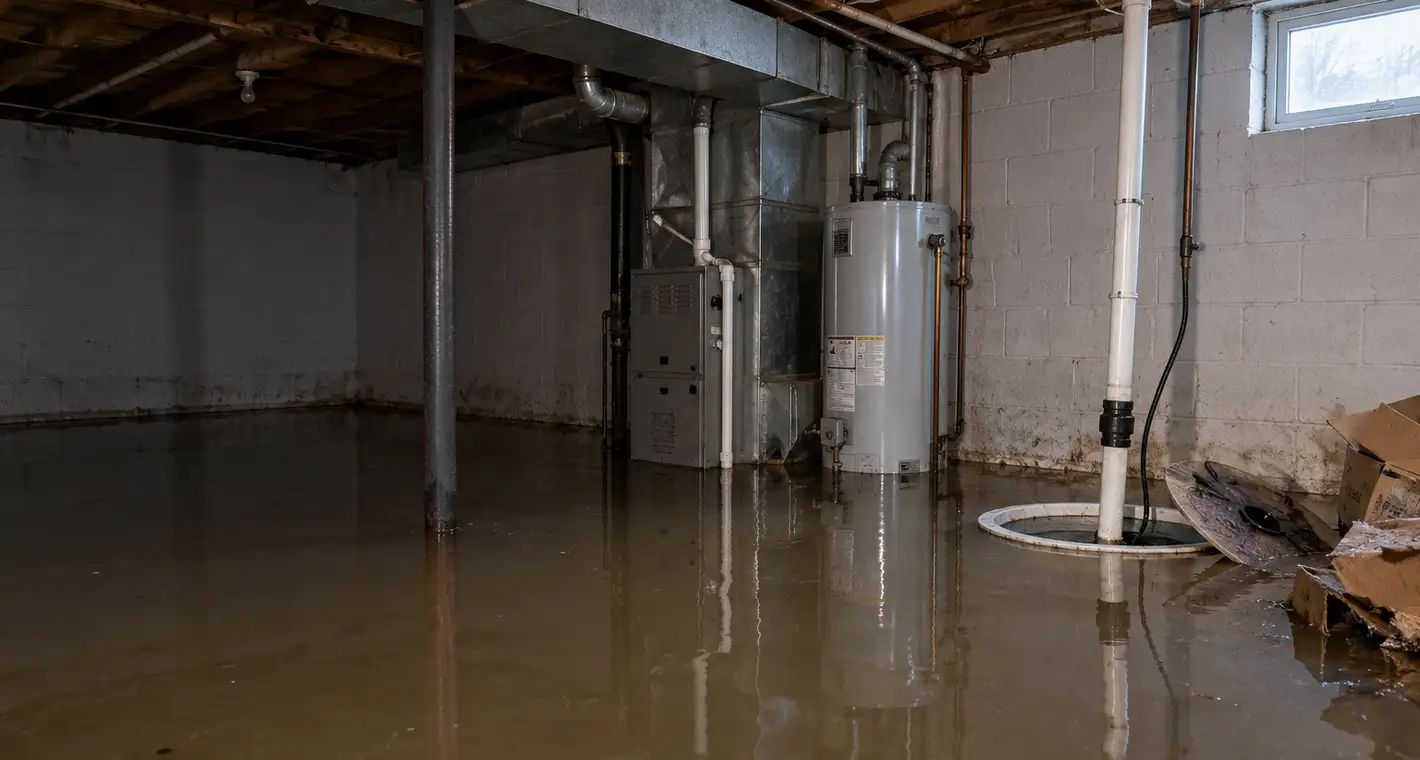
- Basement Flood CleanupBelow-grade water: sump failures, sewer surcharge, seepage through block walls.
- Sewage Backup CleanupContaminated water from floor drains and laterals, handled under containment.
- Mold RemediationGrowth that took hold after water sat longer than it should have.
Water damage restoration across Macomb and South Oakland, Michigan
- Flooded Basement Cleanup WarrenZIP 48088, 48089, 48091, 48092, 48093
- Water Damage Restoration Sterling HeightsZIP 48310, 48312, 48313, 48314
- Water Damage Restoration St. Clair ShoresZIP 48080, 48081, 48082
- Water Damage Restoration TroyZIP 48083, 48084, 48085, 48098
- Water Damage Restoration Royal OakZIP 48067, 48073
- Water Damage Restoration EastpointeZIP 48021
- Water Damage Restoration RosevilleZIP 48066
- Water Damage Restoration FraserZIP 48026
- Water Damage Restoration Madison HeightsZIP 48071
- Water Damage Restoration FerndaleZIP 48220
- Water Damage Restoration Hazel ParkZIP 48030
Water damage restoration Warren MI: questions we are asked
- Will my homeowners insurance cover water damage?
- It depends on the cause rather than the damage itself. Policies commonly cover sudden and accidental events such as a burst supply line, a failed water heater, or an appliance hose that lets go. Damage that developed gradually from a long-standing leak, and damage from surface flooding, are typically handled differently or excluded. Sewer and drain backup is usually a separate endorsement rather than part of the base policy, and sewage backup cleanup Warren is the loss that most often shows a household it was never added.
- What does water damage restoration cost?
- Cost tracks the size of the affected area, how long the water sat, whether the water was clean or contaminated, and how much material has to be removed rather than dried. A contained loss caught within hours is a different job from one that has been spreading for days. Any provider should walk the property and give you a written scope before work begins rather than a number over the phone.
- How fast can someone reach my property?
- Almost all of the coverage area sits within a short drive of the I-696 and I-75 corridors, and on an ordinary day that means a crew is with you inside an hour or two. The honest constraint is not distance but simultaneity: after a heavy storm every provider across Macomb and south Oakland is dispatching at the same time, and the properties furthest out, at the lake end of St. Clair Shores and the north end of Troy, wait longest. Calling early in an event matters more than living close.
- What is the difference between water damage restoration and mold remediation?
- Restoration deals with the water itself: removing it, drying the structure, and returning materials to normal moisture levels. Mold remediation deals with growth that has already established, which requires containment of the work area, controlled removal of affected material, and cleaning rather than simply drying. Water damage caught early often prevents the second problem entirely, which is why mold remediation Warren is largely avoidable when drying starts on day one.
- Do I need to leave the house during the work?
- Usually not. Most losses are confined to part of a home and drying equipment, though loud, runs safely with people in the house. Situations that more often call for staying elsewhere include contaminated water in living space, damage affecting the electrical system, or remediation work that requires sealing off a large portion of the floor plan.
- Who are the providers on this site?
- They are independent restoration contractors working across Macomb and South Oakland, Michigan. This site is not a contractor and does not perform restoration work. It connects homeowners with providers in their area, and it is the homeowner's responsibility to verify that the contractor they hire carries the license and insurance the work requires.